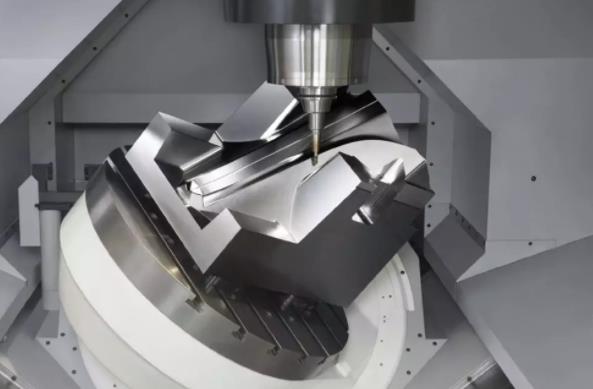
The difficulty of five-axis machine tools is distributed across the entire chain. First, the numerical control system: it must handle complex spatial interpolation, error compensation, and multi-axis synchronization while maintaining real-time performance—a segment long monopolized by foreign companies. Second, core functional components: high-precision rotary axes, torque motors, high-rigidity spindles, precision lead screws, and guides—any deficiency in accuracy will manifest in the workpiece. Third, precision retention: the machine must maintain accuracy under prolonged cutting and temperature fluctuations, involving thermal deformation compensation and structural design. Fourth, application processes: five-axis programming and process parameters require long-term accumulation; purchasing equipment does not equate to operational proficiency. Thus, five-axis capability represents a classic "equipment, system, and process trinity" threshold.
Technical Challenges of Five-Axis Machining Centers
2026-09-21
96 views
tag:
#cnc
 العربية
 简体中文
简体中文 Nederlands
 English
 Français
 Deutsch
 Italiano
 日本語
日本語 한국어
한국어 Português
 Русский
 Español