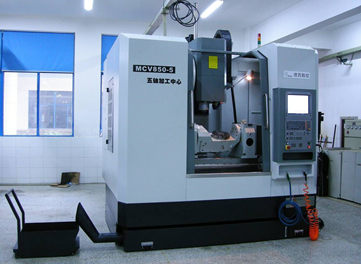
There are many factors that affect such research injuries, and we can take corresponding measures to prevent their occurrence and development.
(1) Factors of lubricating grease
The lubrication state has a great impact on adhesive wear type abrasion. As long as the friction surface always maintains a sufficiently strong lubricating film to avoid direct contact between the metal surfaces and the formation of dry or semi dry friction, the occurrence and development of adhesive wear type abrasion can be effectively prevented and controlled. Among the various factors that affect such injuries, ensuring good lubrication of the friction surface is the most important factor. Detailed explanation of common problems and repairs in the mechanical parts of CNC machine tools. Adding oil-based or viscosity additives to lubricating oil can improve the adsorption capacity and oil film strength of the lubricating oil film, and can double the ability to resist abrasion.
(2) Stress factors
Adhesive wear type abrasion generally increases with the increase of pressure. When the pressure load exceeds a certain value of the hardness of the friction pair material, the oxide film on the surface of the friction pair is crushed, and the protruding points of the newly formed surface between the two surfaces are embedded in each other. When they move relative to each other, this type of abrasion will increase sharply, and in severe cases, it will cause the friction pair surface to stick or even bite. So when using machine tools, the worktable and sliding guide rails should avoid overloading, such as installing workpieces on the worktable of gantry planers, milling machines, boring machines, etc., which should be distributed reasonably and not overweight. During major repairs, the guide rails of machine tools undergo quenching treatment, which also has a significant effect on preventing such scratches.
(3) Temperature factor
The temperature also has a significant impact on the occurrence of adhesive wear type abrasion. The heat generated during the friction process can cause the temperature of the friction surface to rise to a certain extent. In mild cases, it can damage the lubricating film and cause direct contact between the metal surface, resulting in dry or semi dry friction; In severe cases, it can cause the material to be in a tempered state and reduce its hardness; More importantly, local areas can cause the material on the friction surface to be in a molten state. All of these will contribute to the occurrence of such injuries. Choosing materials with high thermal stability or strengthening cooling measures are effective methods to prevent adhesive wear and tear caused by temperature.
(4) Factors affecting sliding speed
Under constant pressure, when the sliding speed is low, the effect of forming a lubricating oil film decreases, and the thickness of the oil film is small. The oil film often partially breaks due to the inability to withstand the pressure of moving parts, causing direct contact between the two metals and easily leading to abrasion. However, when the sliding speed reaches a certain level, the temperature of the friction pair increases, which can easily damage the lubricating oil film and cause abrasion. Therefore, choosing an appropriate sliding speed can reduce the tendency to produce adhesive wear type abrasion.
(5) Factors affecting surface roughness
Generally speaking, the smaller the surface roughness of the friction pair, the greater the ability to resist adhesive wear type abrasion. Properly reducing the surface roughness can prevent such abrasion. For new machine tools, gradually loading and running in operation is often used to reduce surface roughness and reduce early occurrence of adhesive wear type abrasion. However, if the surface roughness of the friction pair is reduced too low, the lubricant cannot be stored between the friction surfaces, and it is easy to cause scratches. Therefore, when the patterns on the machine tool guide rail are worn, they are often re scratched during maintenance to facilitate oil storage and prevent scratches.
(6) Material factors
Brittle materials have stronger resistance to adhesive wear than plastic materials; Friction pairs composed of materials with high mutual solubility are more prone to wear and tear compared to friction pairs composed of materials with low mutual solubility; The friction pair composed of metal and non-metal has a lower tendency to produce such abrasion compared to the friction pair composed of two metals. When repairing machine tools, non-metallic coatings can be used to repair slide guides, shafts, and sleeves using different materials, or surface treatment processes can be applied to the shafts to reduce adhesive wear and tear.
 العربية
 简体中文
简体中文 Nederlands
 English
 Français
 Deutsch
 Italiano
 日本語
日本語 한국어
한국어 Português
 Русский
 Español