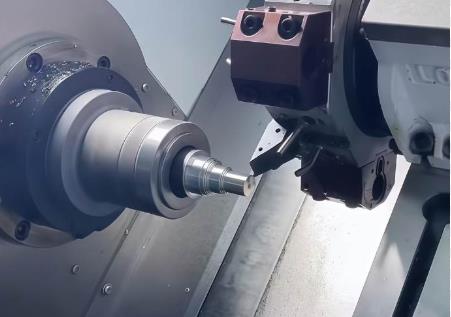
This experiment also becomes an absolute excitation test, commonly used methods include sine excitation and pulse excitation.
By absolutely exciting the spindle system of the machine tool in the radial X and Y directions, the transfer functions of the main components of the machine tool in different directions are obtained. Through the analysis of the transfer functions, the maximum dynamic flexibility (dynamic stiffness) and weak links of each component of the machine tool are obtained, and the dynamic stiffness of the main components is evaluated to determine whether they match.
Excitation test and cutting test complement each other and are one of the main methods for evaluating the dynamic characteristics of machine tools. By calculating the amplitude frequency, phase frequency, and amplitude phase characteristic curves of the dynamic flexibility based on the test results, various relevant data of the dynamic parameters of the machine tool spindle such as dynamic flexibility (dynamic stiffness), resonance frequencies of each order, and damping ratio can be obtained. This indirectly evaluates the cutting anti vibration performance of the machine tool, optimizes and improves the inherent characteristics of low order resonance, and enhances the cutting anti vibration ability of the machine tool. The "JB/T 2322.1-2002 Performance Test Methods for Horizontal Lathes" and "JB/T13812-2020 Performance Test Methods for Machining Centers" respectively specify the dynamic stiffness (absolute excitation) test methods for lathes and machining centers, which can be used as a reference for other types of machine tools.
 العربية
 简体中文
简体中文 Nederlands
 English
 Français
 Deutsch
 Italiano
 日本語
日本語 한국어
한국어 Português
 Русский
 Español