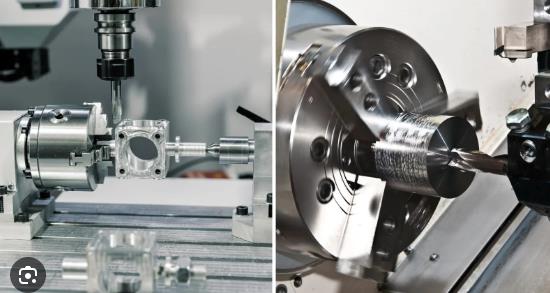
The ability of a machine tool to resist deformation under cutting force directly affects its machining efficiency, indirectly reflects its resistance to cutting vibration, and also indicates the rationality of structural design, the stiffness of major components, the distribution of stiffness, and whether the material selection has achieved optimal performance.
Between the machine tool spindle and the worktable (or lathe tool post, tailstock, etc.), a static load is applied to the spindle based on its maximum resistance in all directions. The displacements of the spindle relative to the worktable (or lathe tool post, tailstock, etc.) in the X, Y, and Z directions are measured separately to determine the radial static stiffness and axial stiffness of the spindle components relative to the machine tool worktable (or lathe tool post, tailstock, etc.).
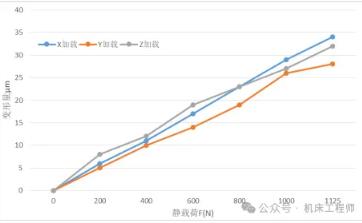
The direction of the static load applied to the spindle varies depending on the type of machine tool. For example, lathes and vertical milling machines apply static loads simultaneously in all three directions of the spindle, while coordinate boring machines and machining centers load the spindle separately in the radial and axial directions.
 العربية
 简体中文
简体中文 Nederlands
 English
 Français
 Deutsch
 Italiano
 日本語
日本語 한국어
한국어 Português
 Русский
 Español